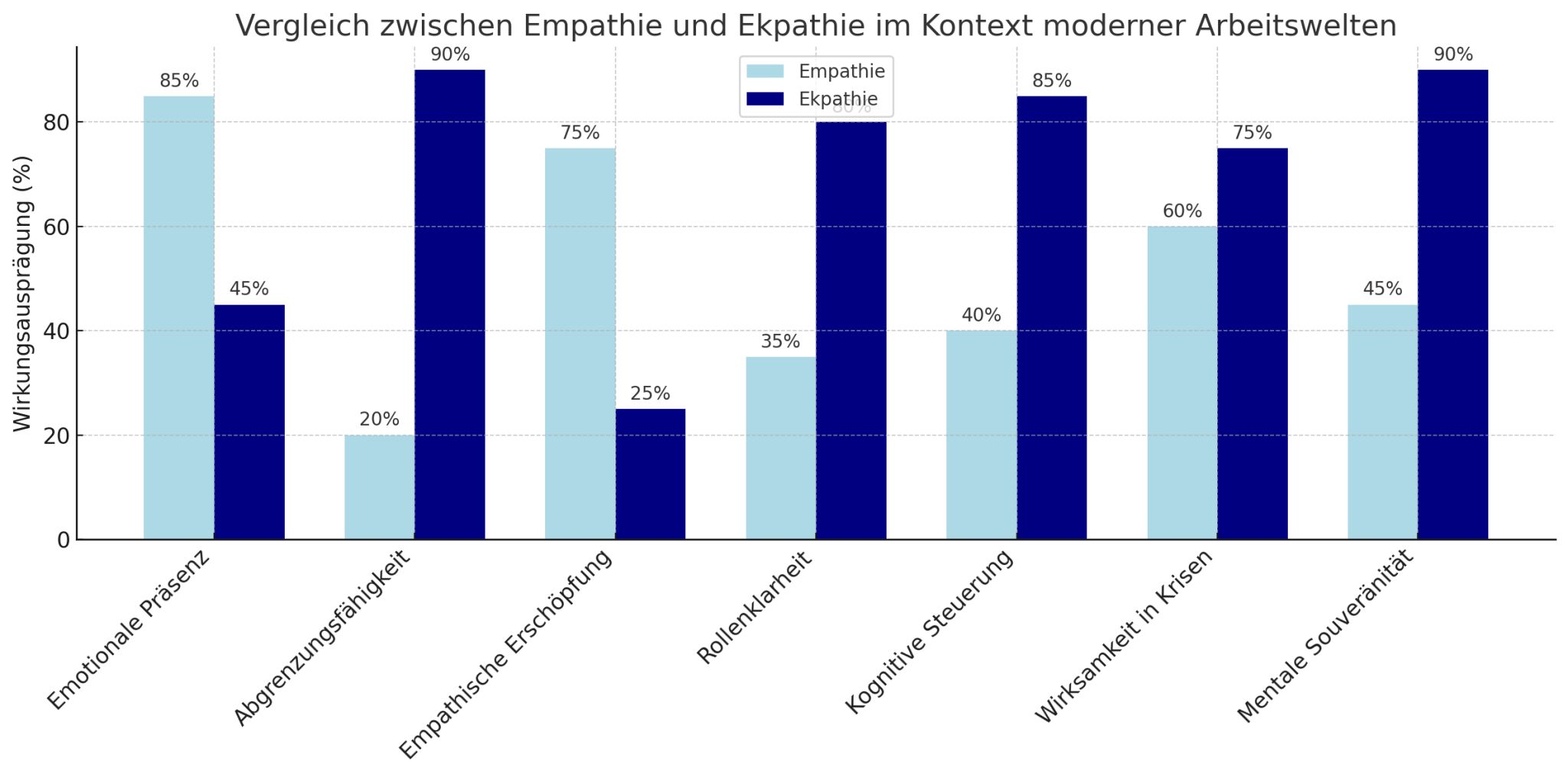
For years, empathy has been heralded as the crown jewel of social competence; particularly in the context of modern work. However, as complexity, diversity, and psychological demands in organizations grow, a previously overlooked counterpart is gaining significance: ekpathy. While empathy refers to the ability to emotionally connect with the experiences of others, ekpathy describes the equally crucial ability to deliberately distance oneself from the emotional states of others, thereby preserving one's own judgement, clarity, and autonomy in decision-making.
In highly dynamic, emotionally charged work environments (such as leadership, consulting, care, or crisis situations), ekpathy serves as a shield against empathetic exhaustion, role diffusion, and affective engulfment. Research on emotional dissonance indicates: Those who resonate emotionally over a prolonged period without the ability to set boundaries risk losing their professional integrity and psychological health. Ekpathy acts here as a mental immune system: not through withdrawal, but through thoughtful distance.
Unlike emotional coldness or disinterest, ekpathy is an active, cognitive-emotional regulatory behavior: It enables one to enter spheres of resonance without losing oneself in them. For leaders, this means clarity in compassion, steadfastness in conflict, and calm in crisis. For teams, it translates to healthy boundaries instead of collective over-identification. For organizations as a whole, ekpathy unlocks pathways to sovereign relational dynamics where closeness and professionalism are not contradictory.
In a work world becoming more psychologically dense, faster-paced, and interactive, empathy alone no longer suffices. The future demands not only compassion but also enhanced mental sovereignty. Ekpathy is the ability to be emotionally present without losing oneself. And this very capability becomes a key competence for healthy, reflective, and effective collaboration.
Strategically training ekpathy is an exceptionally appealing way to make companies more mentally and organizationally efficient.
Next Post