AI enhances performance but undermines the essence of education. Why future skills remain challenging to impart despite AI advancements.
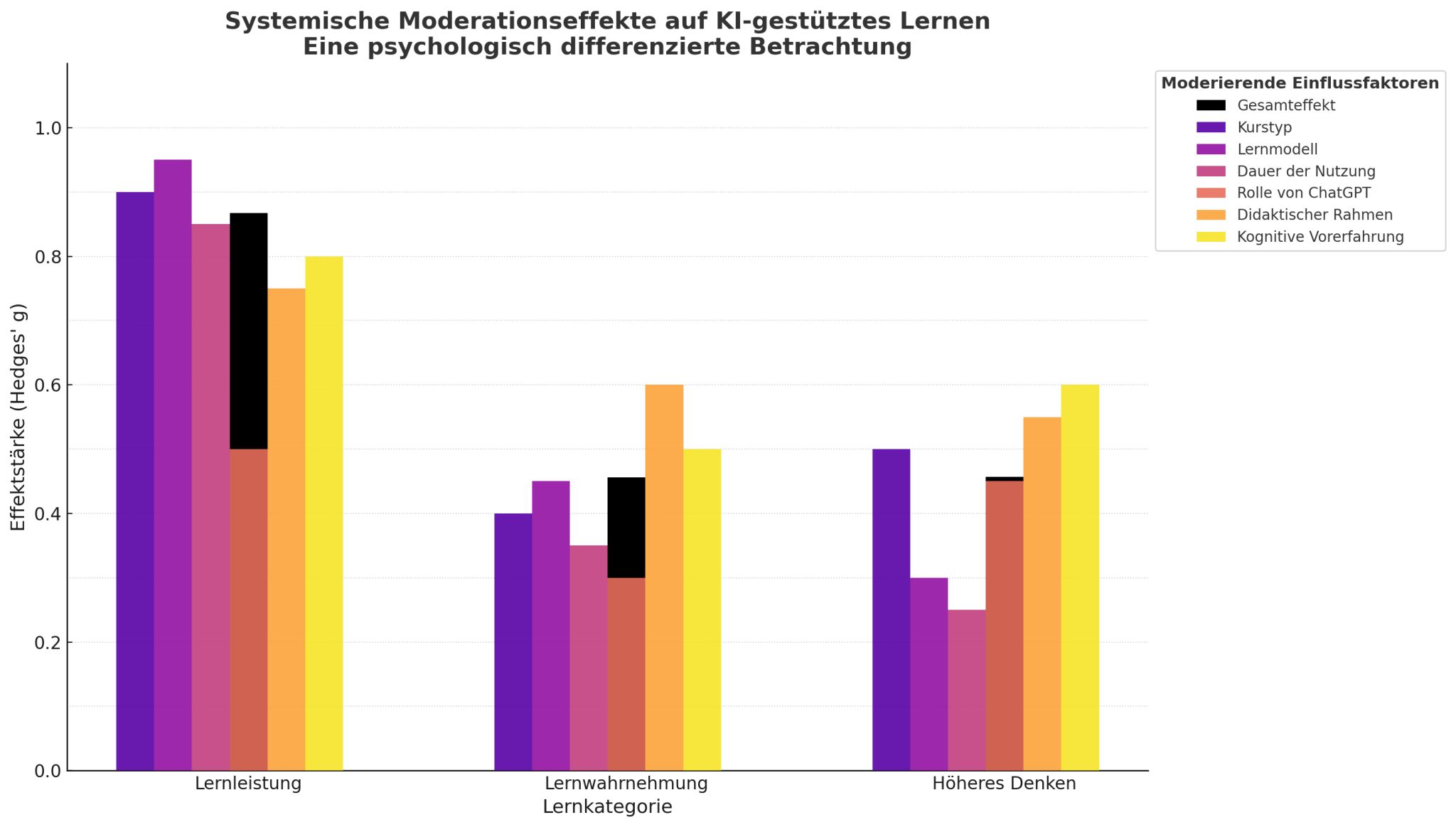
The new meta-analysis by Wang & Fan (2025), based on 51 studies, reveals: ChatGPT has a strong impact on learning performance (g = 0.867) as well as moderate effects on learning perception (g = 0.456) and higher-order thinking (g = 0.457). At first glance, a positive result – yet from a psychological perspective, it reveals a structural dilemma.
The authors recommend utilizing ChatGPT specifically as a tutor, partner, or tool over four to eight weeks to achieve stable effects. But that's precisely where the problem begins: exactly where complex thinking and deeper understanding are involved, the effects remain limited. Why?
Higher-order thinking (such as reflection, transfer, or synthesis) is 𝐧𝐨𝐭 𝐚 𝐟𝐮𝐧𝐜𝐭𝐢𝐨𝐧 𝐨𝐟 𝐢𝐧𝐟𝐨𝐫𝐦𝐚𝐭𝐢𝐨𝐧 𝐩𝐫𝐨𝐜𝐞𝐬𝐬𝐢𝐧𝐠, but rather a psychologically demanding act: metacognitive, tolerant of ambiguity, emotionally engaged. Such abilities do not arise through reactive responses to prompts but through active thinking, friction, and self-direction. This is precisely what cannot be standardized via AI.
Moreover: The studies show high heterogeneity (I² = 89.2 % in learning performance), which means the benefit strongly depends on 𝐜𝐨𝐧𝐭𝐞𝐱𝐭: the type of course, learning model, role of AI. Without 𝐝𝐢𝐝𝐚𝐜𝐭𝐢𝐜-𝐩𝐬𝐲𝐜𝐡𝐨𝐥𝐨𝐠𝐢𝐜𝐚𝐥 𝐟𝐫𝐚𝐦𝐢𝐧𝐠, the effect of ChatGPT is hardly controllable. And paradoxically, the skills that AI is meant to foster (namely critical thinking and self-regulation) are exactly those that are already necessary to use the technology effectively.
The third, often overlooked point is the 𝐩𝐬𝐲𝐜𝐡𝐨𝐥𝐨𝐠𝐢𝐜𝐚𝐥 𝐢𝐧𝐞𝐫𝐭𝐢𝐚 𝐨𝐟 𝐞𝐝𝐮𝐜𝐚𝐭𝐢𝐨𝐧𝐚𝐥 𝐜𝐮𝐥𝐭𝐮𝐫𝐞𝐬. Innovations are quickly introduced technically, but hardly integrated mentally. The transformation of inner learning attitudes (toward more autonomy, reflection, and intrinsic motivation) requires more than tools. It requires leadership that is itself capable of learning.
The numbers sound promising, yet they conceal the real issue: the key competencies of the future are not technical, but psychological. And they cannot be “installed,” they must be developed. Ignoring this will leave one overwhelmed by the AI-driven learning revolution; not because it is too powerful, but because we are internally unprepared.
𝐁𝐞𝐜𝐚𝐮𝐬𝐞: 𝐖𝐡𝐨 𝐨𝐮𝐭𝐬𝐨𝐮𝐫𝐜𝐞𝐬 𝐦𝐞𝐭𝐚𝐜𝐨𝐠𝐧𝐢𝐭𝐢𝐨𝐧 𝐥𝐨𝐬𝐞𝐬 𝐭𝐡𝐞 𝐚𝐛𝐢𝐥𝐢𝐭𝐲 𝐭𝐨 𝐟𝐨𝐫𝐦 𝐣𝐮𝐝𝐠𝐞𝐦𝐞𝐧𝐭𝐬. 𝐖𝐞 𝐨𝐩𝐭𝐢𝐦𝐢𝐳𝐞 𝐥𝐞𝐚𝐫𝐧𝐢𝐧𝐠 𝐨𝐮𝐭𝐜𝐨𝐦𝐞𝐬 - 𝐚𝐧𝐝 𝐢𝐧 𝐝𝐨𝐢𝐧𝐠 𝐬𝐨 𝐥𝐨𝐬𝐞 𝐬𝐢𝐠𝐡𝐭 𝐨𝐟 𝐭𝐡𝐞 𝐡𝐮𝐦𝐚𝐧 𝐞𝐥𝐞𝐦𝐞𝐧𝐭.
Next Post