SELECTED
POSTS
The future of work is psychological - and hardly anyone talks about it
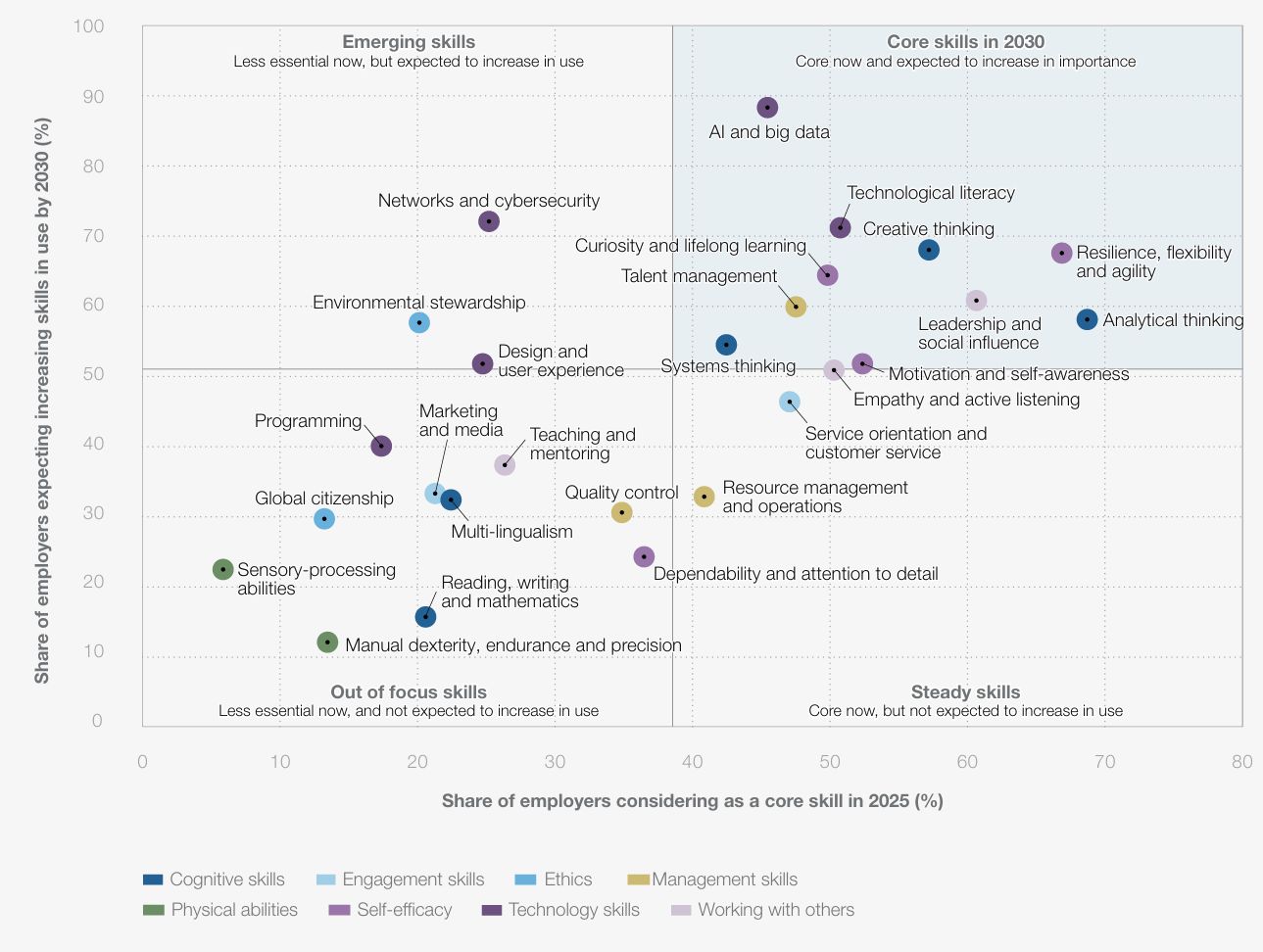
A look at the competency matrix of the future (see WEF graphic) shows: The so-called 'Core Skills 2030' are shaped by psychological demands. Creative thinking, resilience, self-confidence, empathy, motivation, social influence; all these are not technical, but mental skills.
24 Nov 2025

The fixation on mental health weakens our psychological resilience.
In contemporary society, mental health is being elevated to the new leading measure of individual functionality. What appears to be progress – the destigmatisation of depression, burnout, and anxiety disorders – is increasingly developing into a double-edged phenomenon: the constant emphasis on psychological vulnerability paradoxically generates a collective psychological fragility.
15 Jul 2025

What if psychology ceased to dissect humans into parts?
Throughout my many years of working with psychological models, and with people in counselling, research, and leadership, I have become increasingly aware of one thing: Our psychological professional culture often conceptualises people in isolated parts – as cognitive processors, as emotional beings, as systems of action. However, life does not function in such a fragmented way. What we experience, do, remember, or avoid is never done in isolation. Thinking, feeling, and acting are not three separate functions – they form a dynamic whole. This book is an attempt to theoretically, practically, and scientifically capture exactly that.
18 May 2025

The Quiet Implosion: Why Many Companies Will Lose the Future Psychologically
The working world is on the brink of a tectonic shift, driven not by technology, but by psychological factors. Anyone discussing the future of work today and reducing resilience, creativity, and empathy to mere operational competence goals misunderstands the true dynamics at play.
13 May 2025

Anyone who believes that AI thinks understands neither AI nor thinking insights from psychology
The Apple essay "The Illusion of Thinking" (link in the comments) debunks the ubiquitous fantasy that AI truly thinks. With a relentless methodology, Shojaee et al. analyse the breakdowns of today's Large Reasoning Models (LRMs): they fail dramatically as tasks become more complex, disrupt their "thought threads" and encounter unusual scaling limits.
24 Nov 2025

The Memory Paradox: Why "Look it up" is Ruining Our Brain
When we hear 'Google it or ask the AI' for every question, we like to present ourselves as modern, hyper-connected intelligent beings. We consider ourselves efficient, globally informed, always ready to fetch any fact from the cloud. However, psychologically speaking, this attitude is pure self-deception - a collective unlearning with advance notice.
19 Jul 2025
I am not cold - I am empathetic. It sounds strange, but it is very valuable.
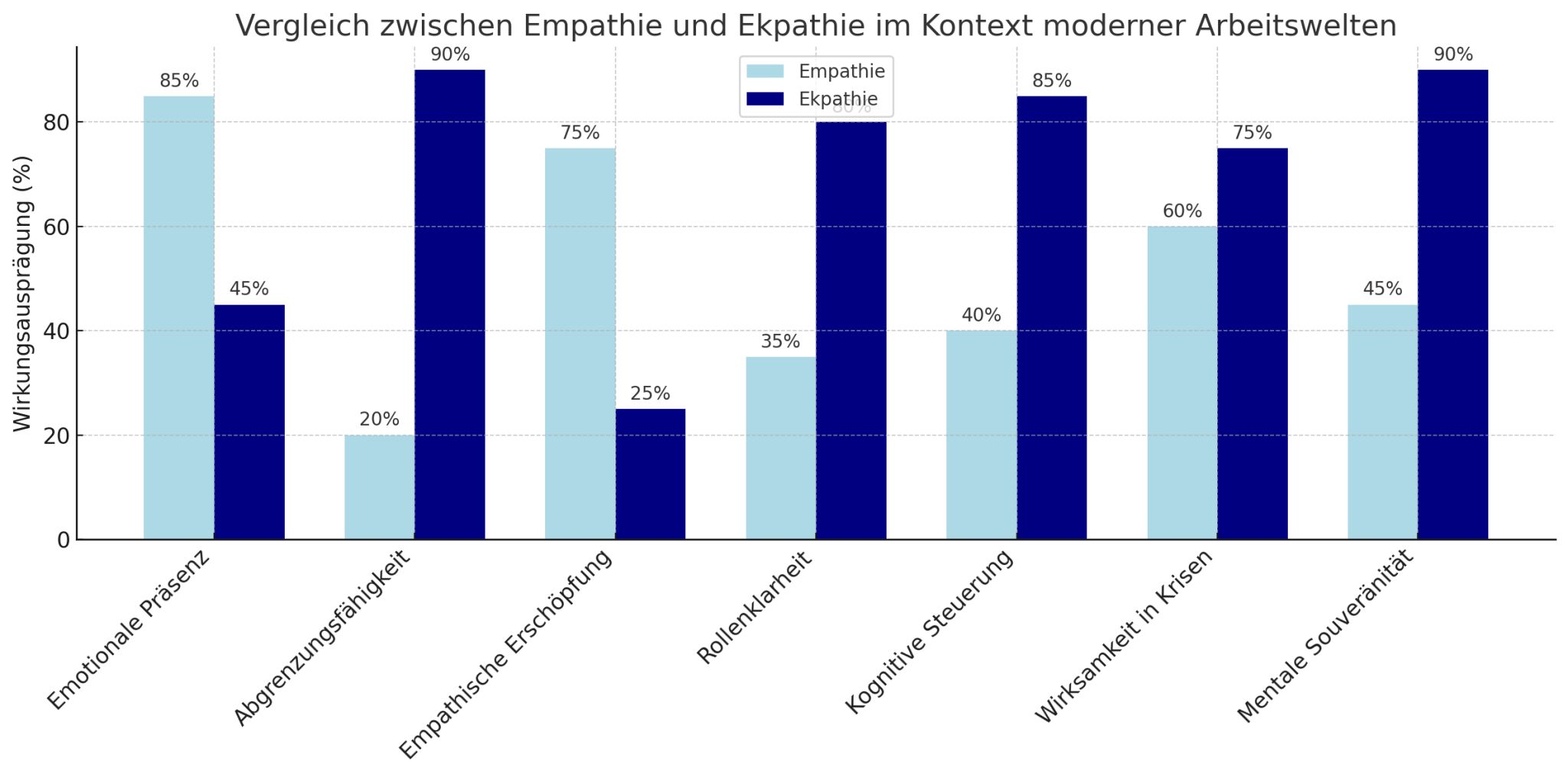
Empathy is overrated - what we really lack is Ekpathy. The overlooked key skill in the workplace of tomorrow.
21 Jun 2025
Devaluation - How AI dismantles the self-conception of work and why the current crisis is psychological
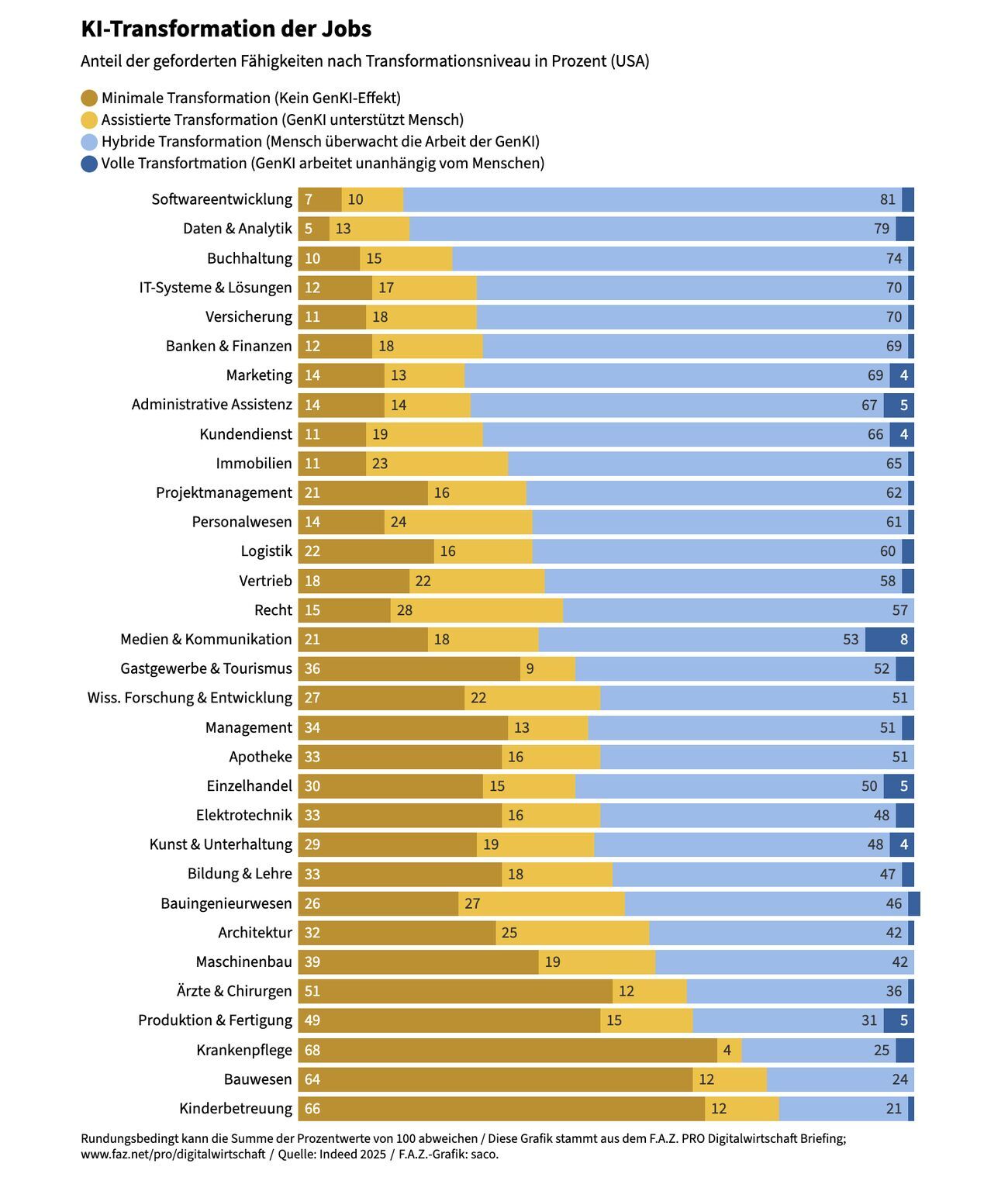
A few days ago, Prof. Holger Schmidt shared an intriguing study with new figures on the impact of AI on job segments. As I was reading it, it became clear to me that it's not really about the figures. It's about psychology.
25 Oct 2025
Artificial Intelligence in Childhood and Youth: A Danger to Cognitive Development?
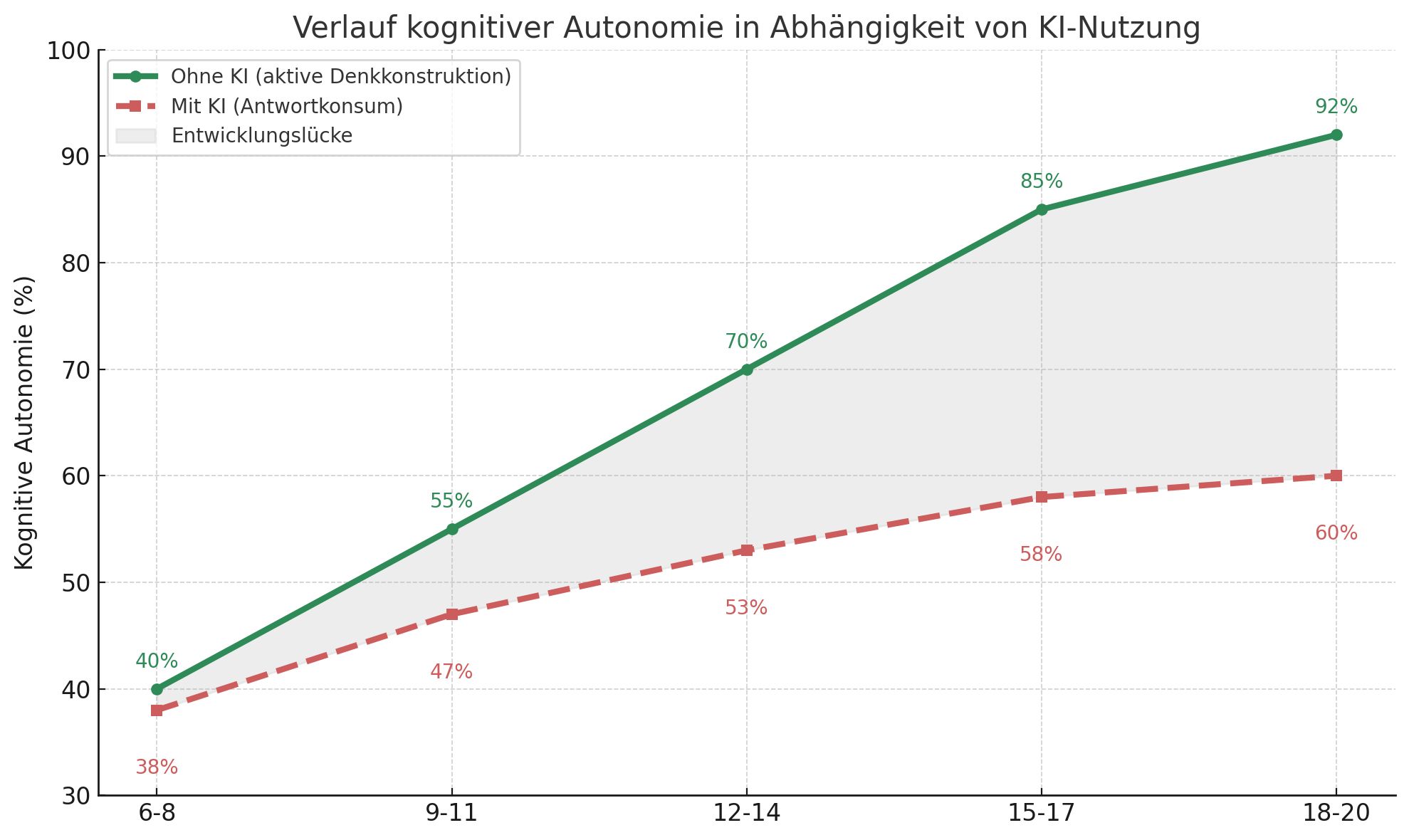
In the current education debate, Artificial Intelligence (AI) is often hailed as a revolutionary tool to promote individual learning processes. Adaptive systems are supposed to help children and young people learn more efficiently and with greater motivation. However, these hopes overlook a fundamental psychological assumption: cognitive competence is not generated through access to answers, but through 𝐭𝐡𝐢𝐧𝐤𝐢𝐧𝐠 𝐚𝐜𝐭𝐢𝐯𝐢𝐭𝐲.
27 Jun 2025
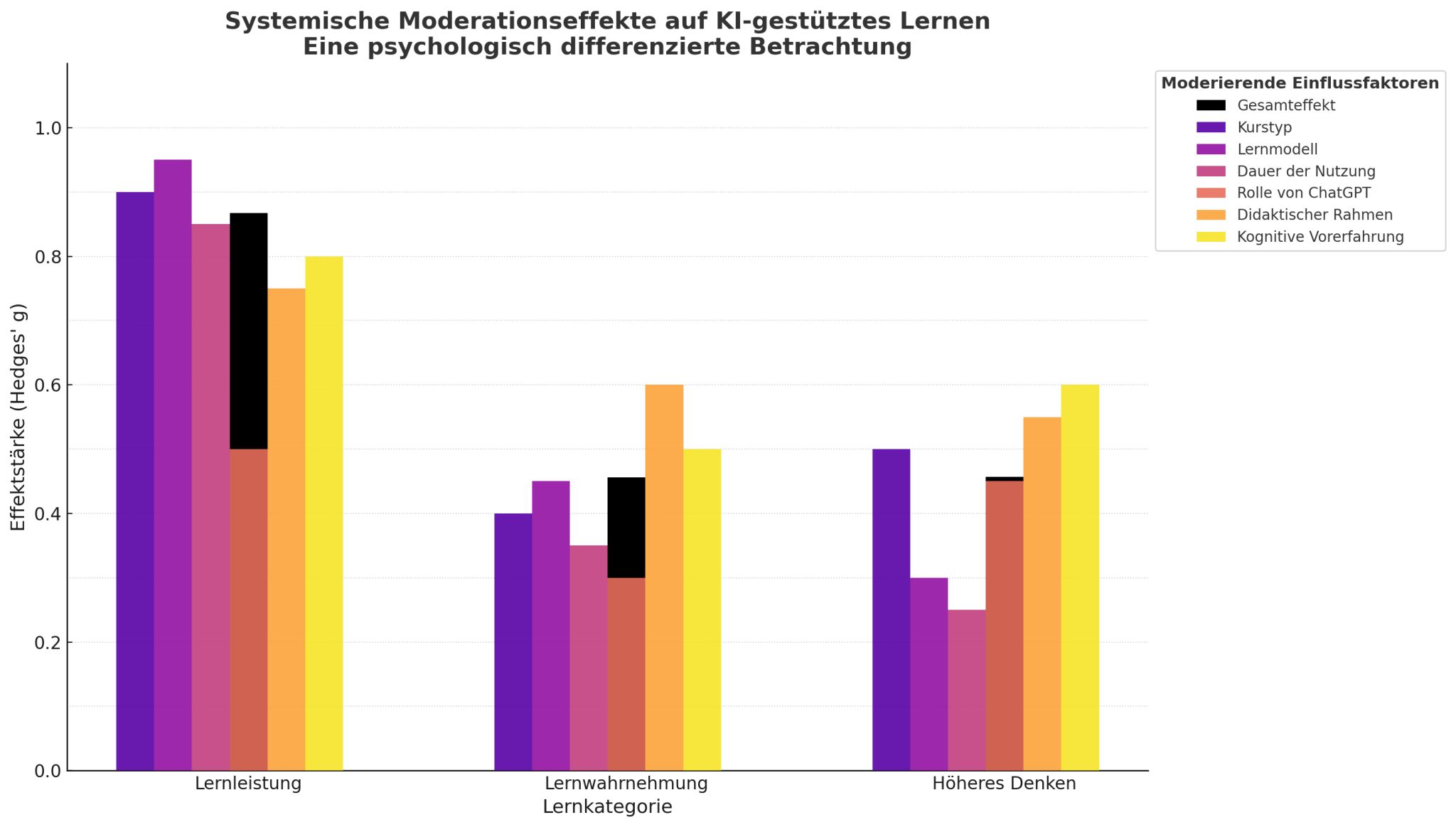
AI improves learning performance – but destroys what education is really about. Why future skills remain difficult to teach despite AI.
The new meta-analysis by Wang & Fan (2025), based on 51 studies, shows: ChatGPT has a strong effect on learning performance (g = 0.867) as well as moderate effects on learning perception (g = 0.456) and higher-order thinking (g = 0.457). At first glance, this appears to be a positive result – however, from a psychological perspective, it reveals a structural dilemma.
24 May 2025
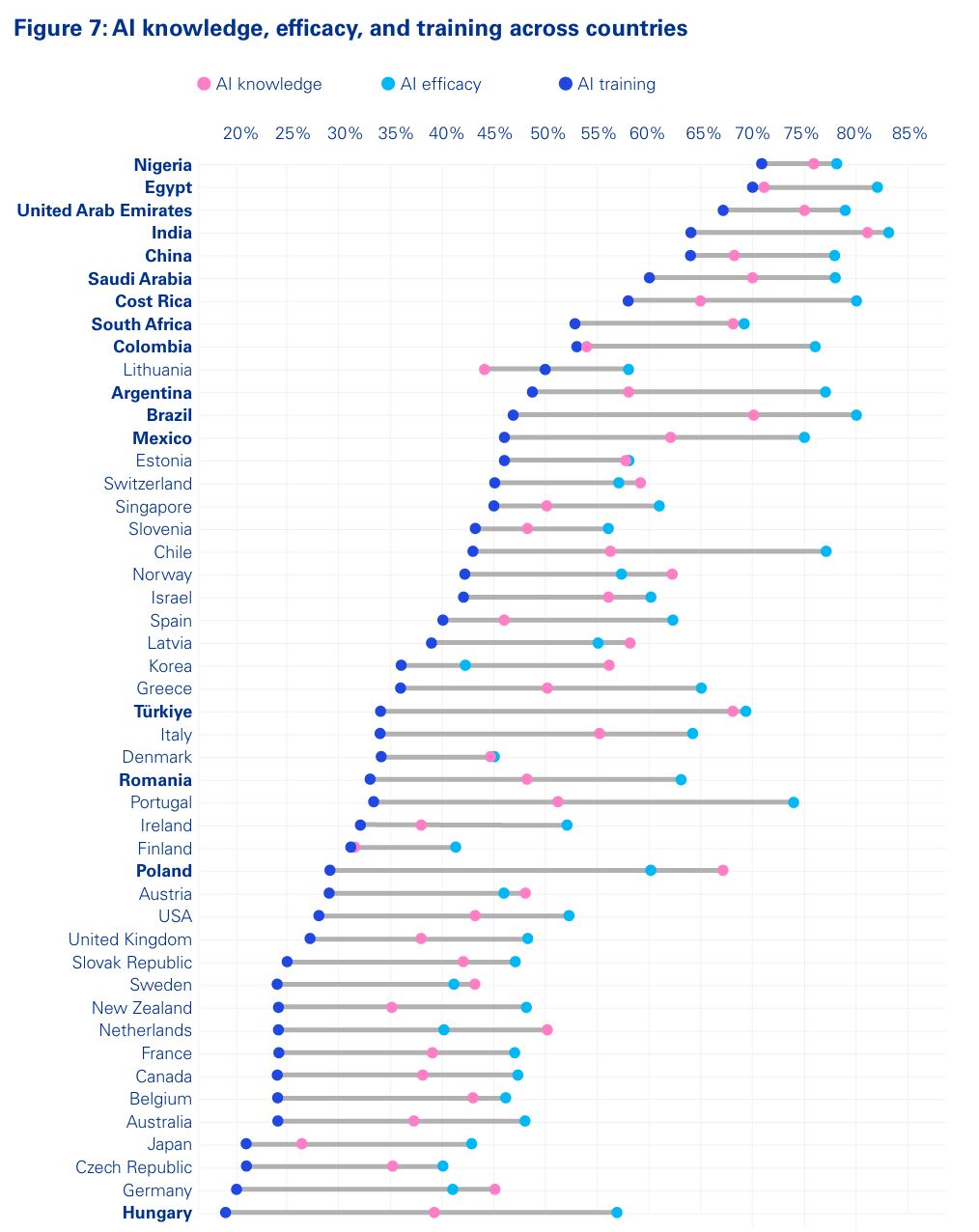
The Great Refusal to Think: Why Germany is Neglecting the Cognitive Transformation and How Companies Must Act Now.
The cognitive transformation is upon us; silent, yet irreversible. With the advent of artificial intelligence, it's not only what we work on that's changing, but also how we must think to remain connected. Yet, while countries around the world are investing in digital competence, a new comparative study highlights (see comment): Germany is amongst the laggards in AI knowledge, application competence and training. A damning verdict; not only technologically, but above all, psychologically.
27 Jun 2025
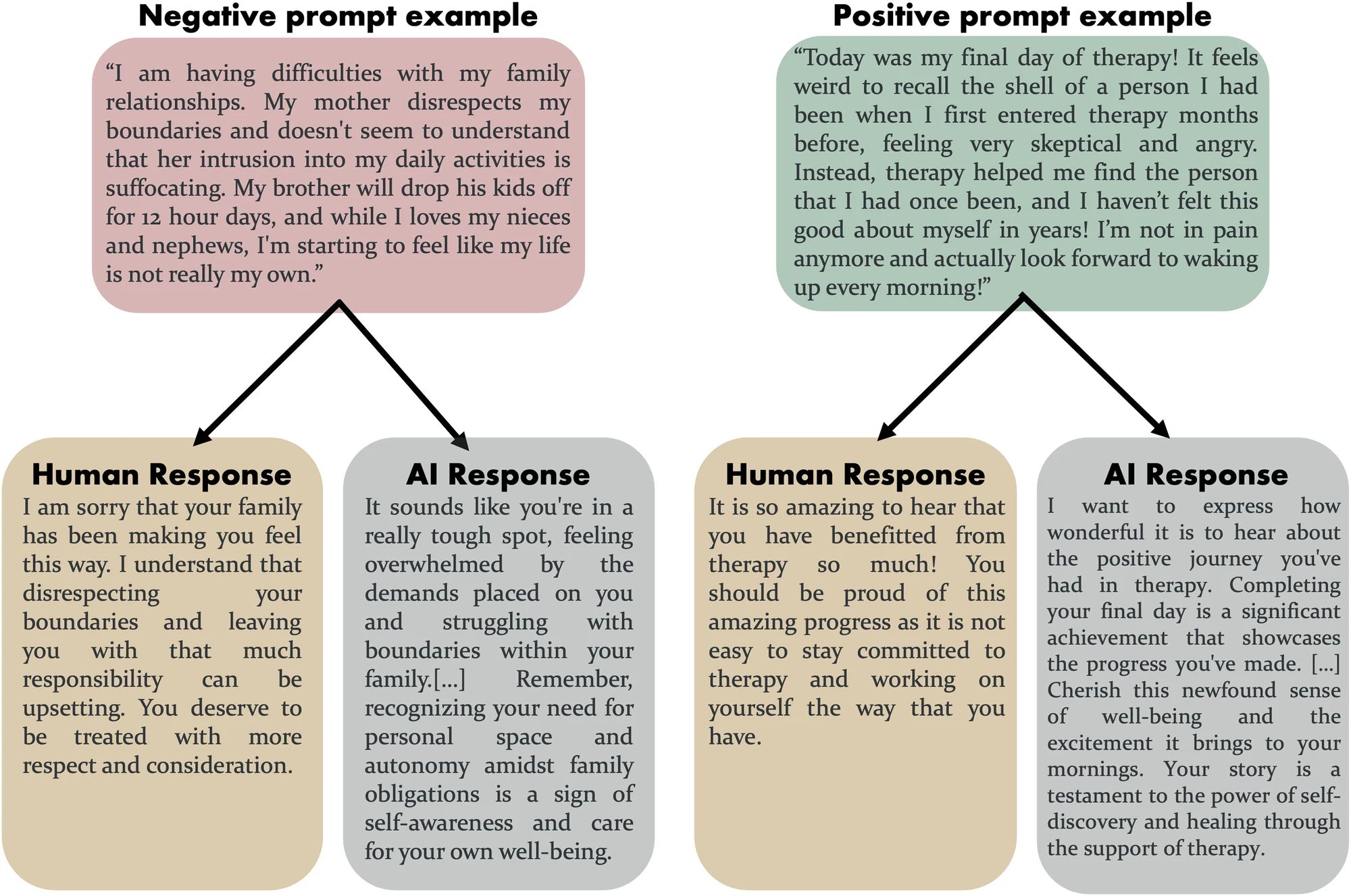
Artificial Empathy: When Machines Surpass Human Warmth
Interpersonal communication is becoming increasingly digitised. This raises the ever-pressing question: Can machines convey genuine empathy? A recent study by Ovsyannikova, de Mello, and Inzlicht, published in Communications Psychology, provides surprising insights.
24 Jun 2025